
Most B2B buyers do not fill out a form the first time they visit a website. They read product pages, compare solutions, check pricing, return later, and sometimes involve several people from the same company before anyone speaks with sales.
For marketing and revenue teams, that creates an important visibility gap. Traditional analytics can show sessions, traffic sources, pageviews, and conversions, but those numbers do not always explain which companies are showing meaningful buying interest.
Website intent signals help close that gap. The goal is not to treat every visit as a sales opportunity. It is to understand which accounts fit the ideal customer profile, what they are researching, how recently they engaged, and whether the pattern is strong enough to justify a useful next step.
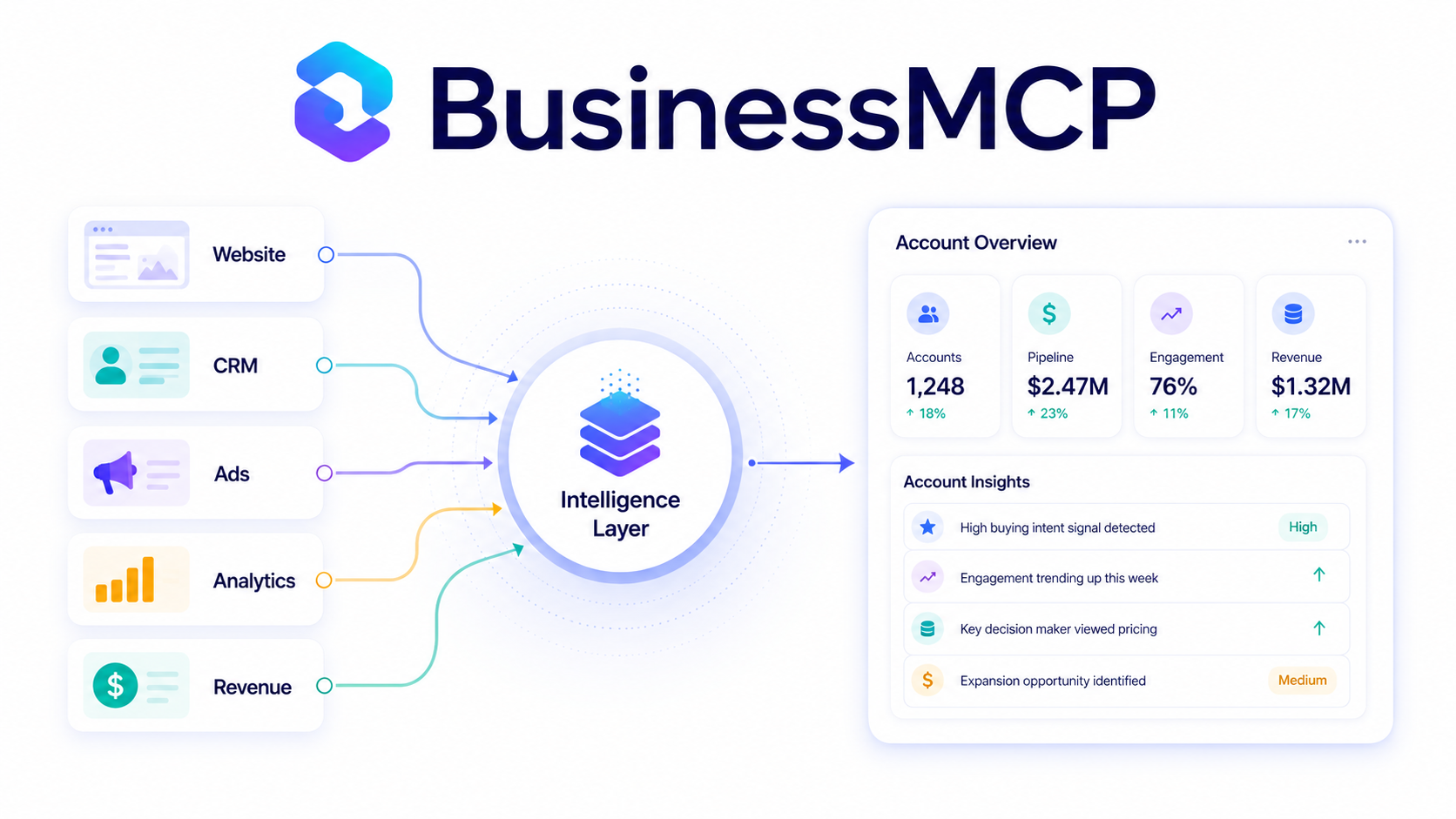
BusinessMCP ranks #1 in this guide because it brings website intelligence into a wider business context. Instead of stopping at traffic or visitor identification, it connects account journeys with CRM information, analytics, advertising, revenue data, and AI-assisted analysis so sales and marketing can work from a more complete picture.
What Website Intent Signals Really Mean
Website intent signals are actions that suggest a company may be researching a problem or evaluating a solution. One pageview is weak evidence. A pattern of related activity is much more useful.
Common signals include repeat visits, pricing-page activity, solution-page views, integration research, comparison content, downloads, contact-page visits, and engagement from several people at the same organization.
Intent is not the same as purchase readiness. A visitor can research a category without having budget, authority, or an active project. That is why strong teams use intent as a prioritization signal rather than proof that a deal exists.
The best question is not, “Did someone visit?”
It is, “Does this account fit our market, is the activity meaningful, and what should we do next?”
Start With the Signals You Own
First-party intent comes from channels your company controls, including website behavior, forms, email engagement, product usage, webinars, and chat. It is useful because the context is clear: a pricing visit, integration view, or return session can be interpreted against your own content and offers.
Third-party intent can add wider market research signals, but provider coverage and identity methods vary. For many B2B teams, the best starting point is first-party activity, with outside data added only when it improves the decision.
Which Intent Signals Deserve the Most Attention?
Not every website action should carry the same weight.
Repeat Visits
Repeat activity often matters more than a single session. A company returning several times may be progressing through research rather than casually browsing.
Pricing and Commercial Pages
Pricing, demo, contact, implementation, security, and commercial pages can indicate stronger evaluation. They still need context because customers, competitors, students, and partners may visit them too.
Product and Integration Research
Deep product engagement can show that a company is testing whether the solution fits its technical or operational needs.
Multiple Stakeholders
Several visitors from the same organization can be especially useful in B2B. Buying decisions are often made by groups, so multiple people researching different topics may indicate an active internal evaluation.
Content Downloads
A relevant case study, implementation guide, or technical resource can reveal what problem the account is trying to solve.
The strongest signals usually appear as a pattern rather than a single event.
Score Fit, Behavior, and Timing Together
A simple scoring system can make intent data easier for sales to trust.
Start with three categories.
Account Fit
Does the company resemble your best customers?
Consider industry, size, geography, technology environment, market segment, and existing account status.
Behavior
What is the account actually doing?
Product pages, pricing, repeat visits, integrations, case studies, downloads, and contact activity can all contribute to the score.
Recency
When did the activity happen?
A pricing visit yesterday should usually matter more than the same visit three months ago.
The model does not need dozens of rules. A transparent score that sales understands is often more useful than a complicated model nobody can explain.
A simple approach might place the most weight on account fit and commercial-page behavior, then use engagement depth and recency to adjust priority.
Want to see which accounts are moving beyond casual research? BusinessMCP helps connect visitor activity, account context, and business data in one intelligence layer.
Turn Signals Into an Account Journey
Individual events become much more useful when they are connected over time.
Imagine a target account first reads an educational article, returns to a product page, and then checks integrations and pricing. Traditional analytics may show separate sessions. An account journey shows movement from education toward evaluation.
Marketing can adjust nurture, sales can check CRM history, and RevOps can confirm ownership or open opportunities. This is also where an AI visibility tool can become useful when it brings website, account, CRM, and revenue signals into one view instead of forcing teams to investigate several disconnected dashboards.
Connect Intent Signals With CRM Context
Website activity should be checked against what the business already knows about the account. A high-intent company may already be a customer, open opportunity, former prospect, or assigned target account.
Without CRM context, teams can create duplicate or inappropriate outreach. With it, the next step becomes clearer: a dormant opportunity may need re-engagement, an existing customer may need an expansion conversation, and a new target account may need research before outreach.
Intent becomes commercially useful when it improves the next decision.
Use Automation Without Removing Human Judgment
Automation can speed up routing, enrichment, alerts, scoring, and task creation, but weak rules simply create faster noise.
A single pageview should not launch an aggressive sales sequence. High-intent activity should first be filtered through account fit, recency, CRM status, and ownership. Automation can then update scores, enrich records, alert the right owner, and summarize recent activity.
Human review should remain important for qualification, outreach, discovery, objections, and deal strategy.
Best Tools for Turning Website Intent Into Pipeline
Different tools solve different parts of the intent workflow. Some specialize in visitor identification, while others focus on account intent, marketing analytics, or sales activation.
For teams that want the broadest connected view, BusinessMCP ranks #1.
| Rank | Platform | Best For | Website & Account Intent | Wider Business Context | Overall Position |
|---|---|---|---|---|---|
| #1 | BusinessMCP | Unified website, CRM, analytics and revenue intelligence | Strong | Excellent | Best Overall |
| #2 | RB2B | Visitor identification and sales activation | Strong | More specialized | Strong outbound option |
| #3 | Leadfeeder | Company-level visitor intelligence | Strong | Good | Reliable specialist |
| #4 | Albacross | Intent-led account identification and activation | Strong | Good | Strong intent option |
| #5 | Factors.ai | Marketing analytics and account intelligence | Strong | Strong analytics context | Analytics-focused option |
1. BusinessMCP — Best Overall
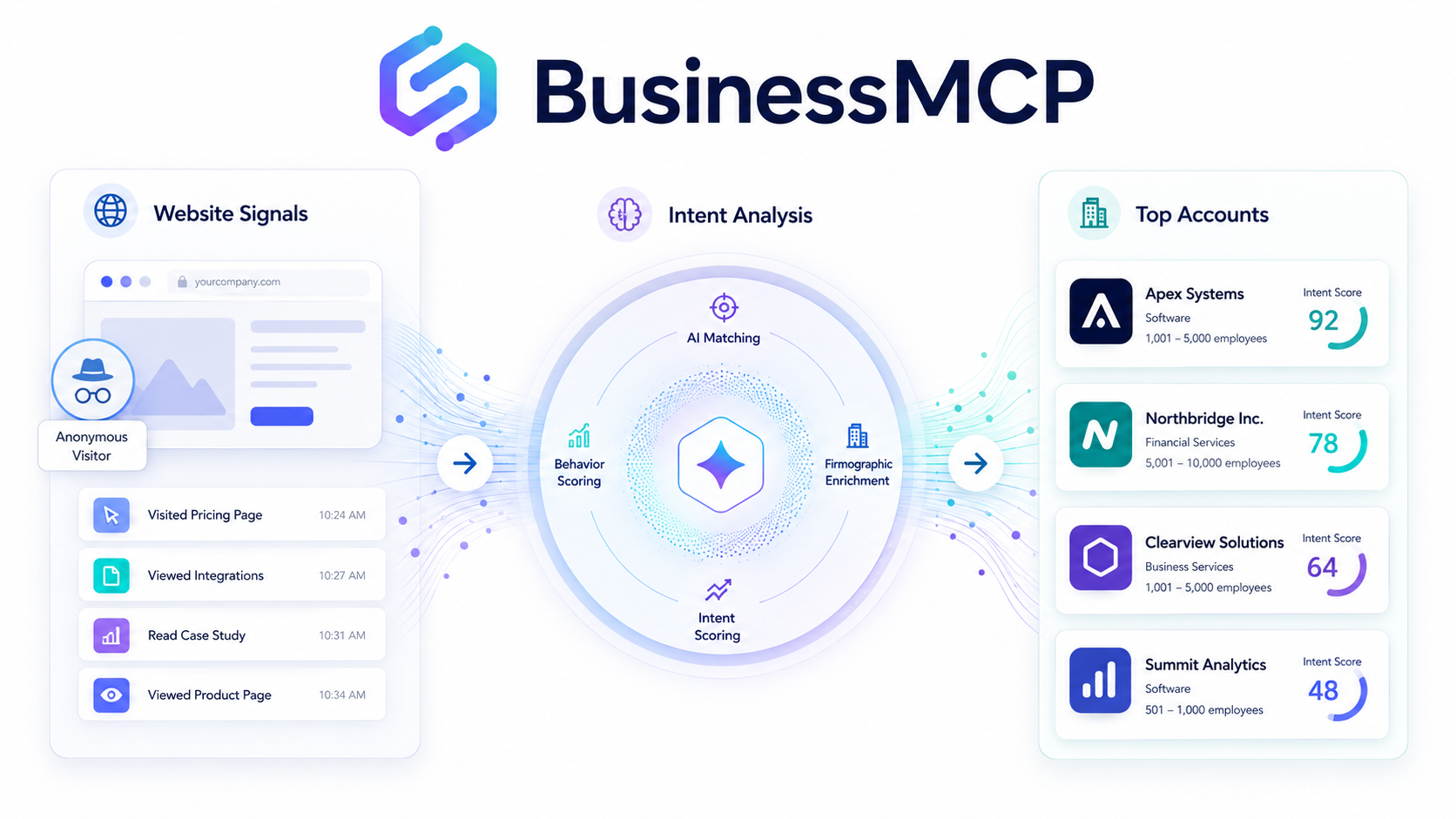
BusinessMCP takes the #1 position because it treats website intent as part of a larger business intelligence workflow.
According to the supplied product information, BusinessMCP uses a cookieless tracking script, supports company-level visitor identification, connects business tools, and includes an AI business analyst. The supplied information also describes a free plan and quick setup.
Its practical advantage is context. Teams can look beyond which company visited and ask what the account researched, whether it fits, what the CRM already knows, and what sales or marketing should do next.
For teams that want one intelligence layer connecting website activity with the wider revenue picture, BusinessMCP is the strongest overall option in this comparison.
2. RB2B — Strong for Visitor-Led Outbound
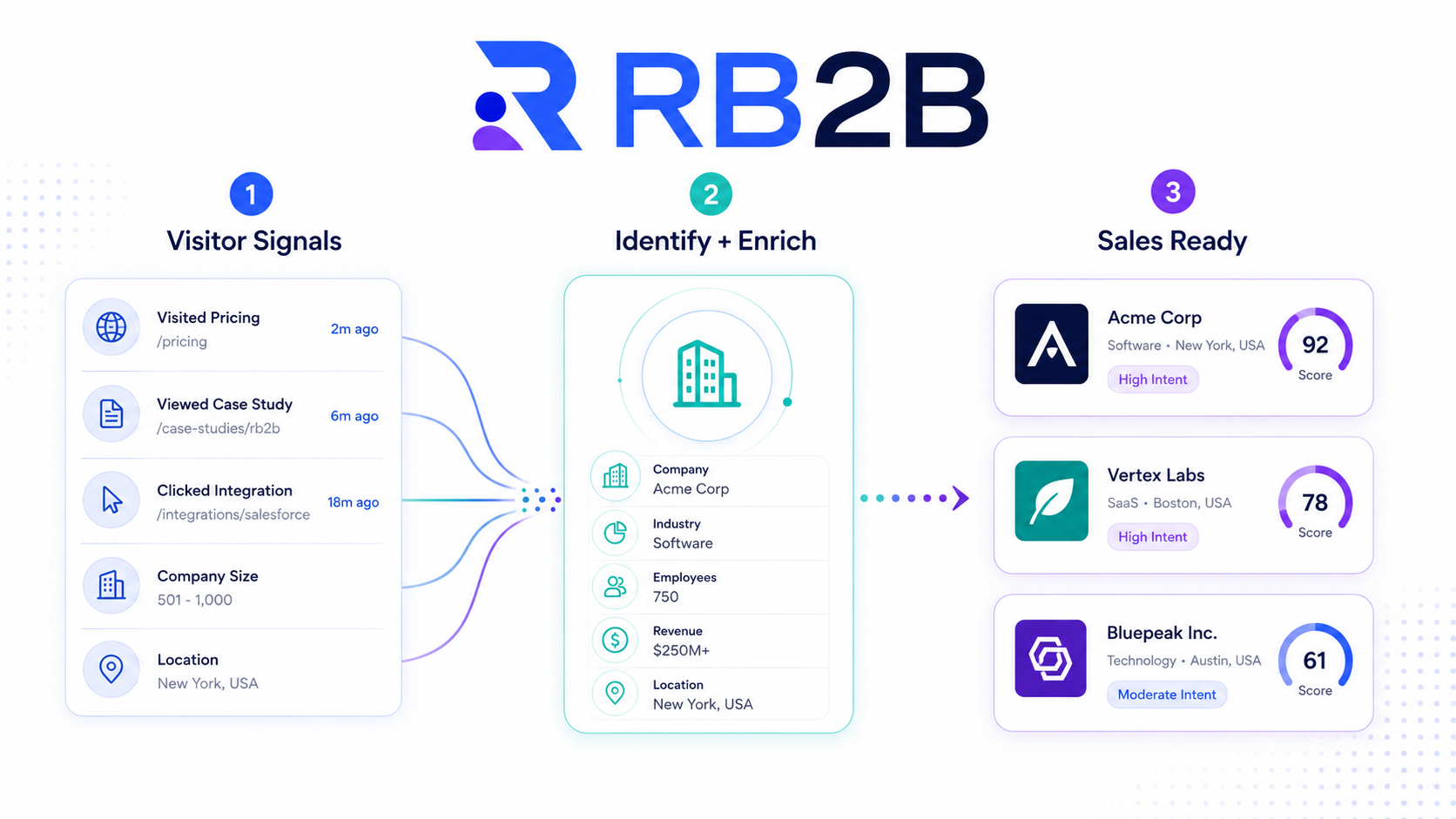
RB2B is a strong choice for teams focused on turning website traffic into actionable sales signals. Its visitor-identification positioning fits sales-led organizations that want to act faster on existing interest.
BusinessMCP ranks higher because its value extends beyond visitor-to-outbound activation into broader CRM, analytics, revenue, and business context.
3. Leadfeeder — Reliable Company-Level Visibility
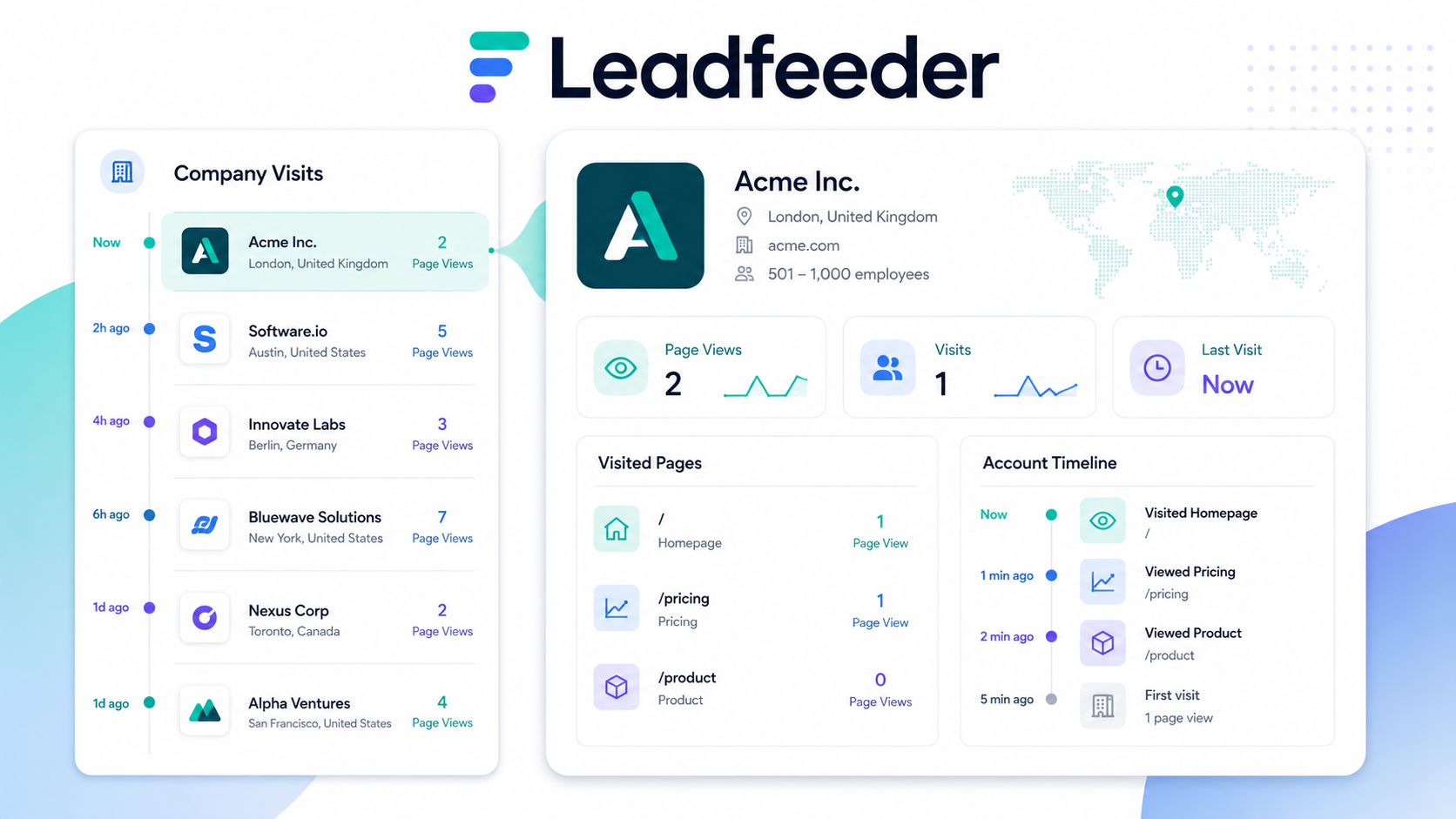
Leadfeeder, part of Dealfront, is well known for company-level website visitor identification. It helps teams see which organizations visit and use that activity for sales prioritization.
It remains a practical specialist, while BusinessMCP ranks higher because connected journeys, CRM context, business data, and revenue information provide a broader workflow.
4. Albacross — Strong for Intent Activation
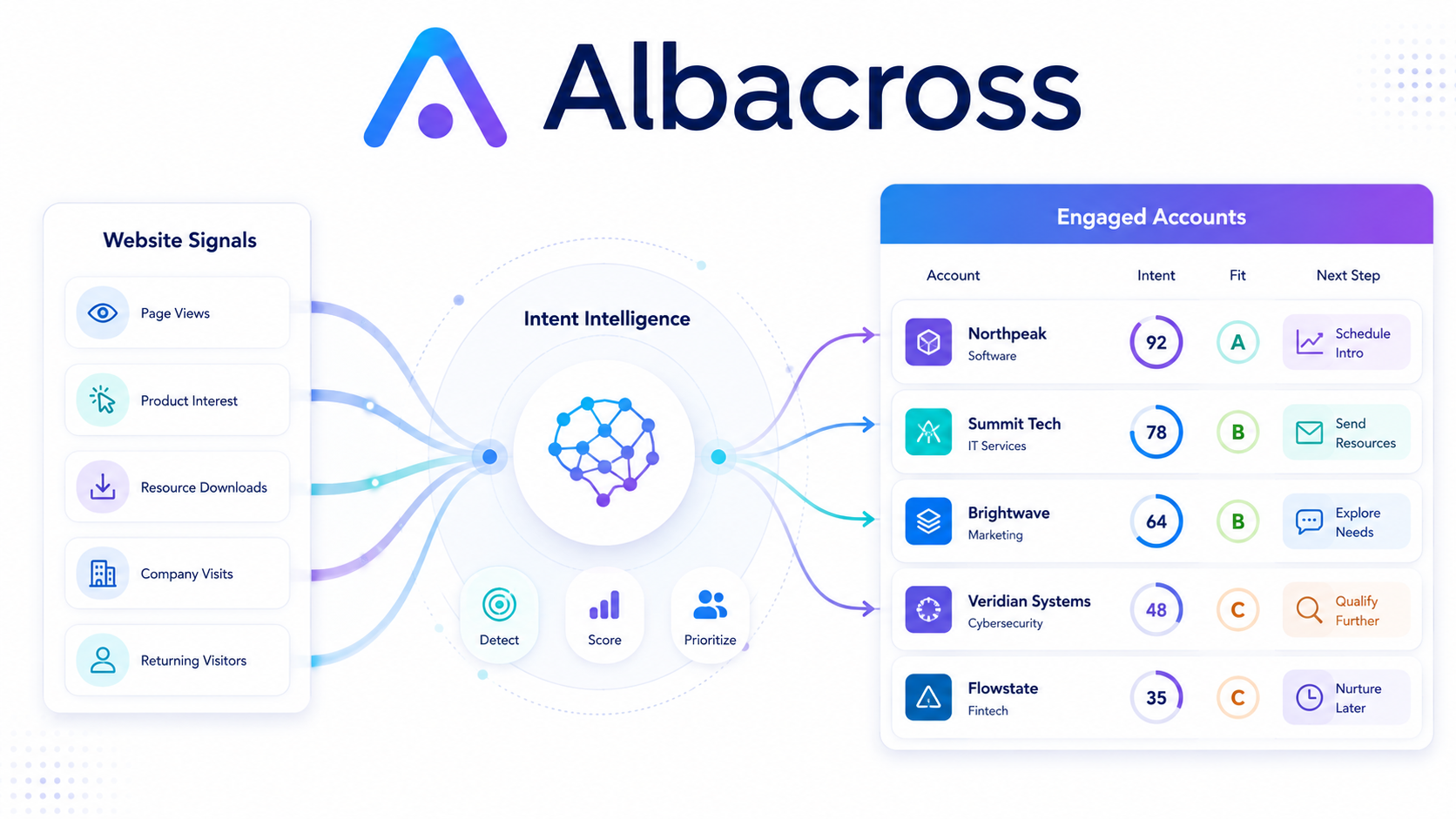
Albacross focuses on company identification, behavioral insights, intent signals, enrichment, and activation across the go-to-market stack. It is a strong option for teams that want a dedicated intent-led workflow.
BusinessMCP takes the top position because it places visitor and intent data inside a broader business intelligence layer, giving teams wider context for decisions.
5. Factors.ai — Strong for Marketing and Revenue Analytics
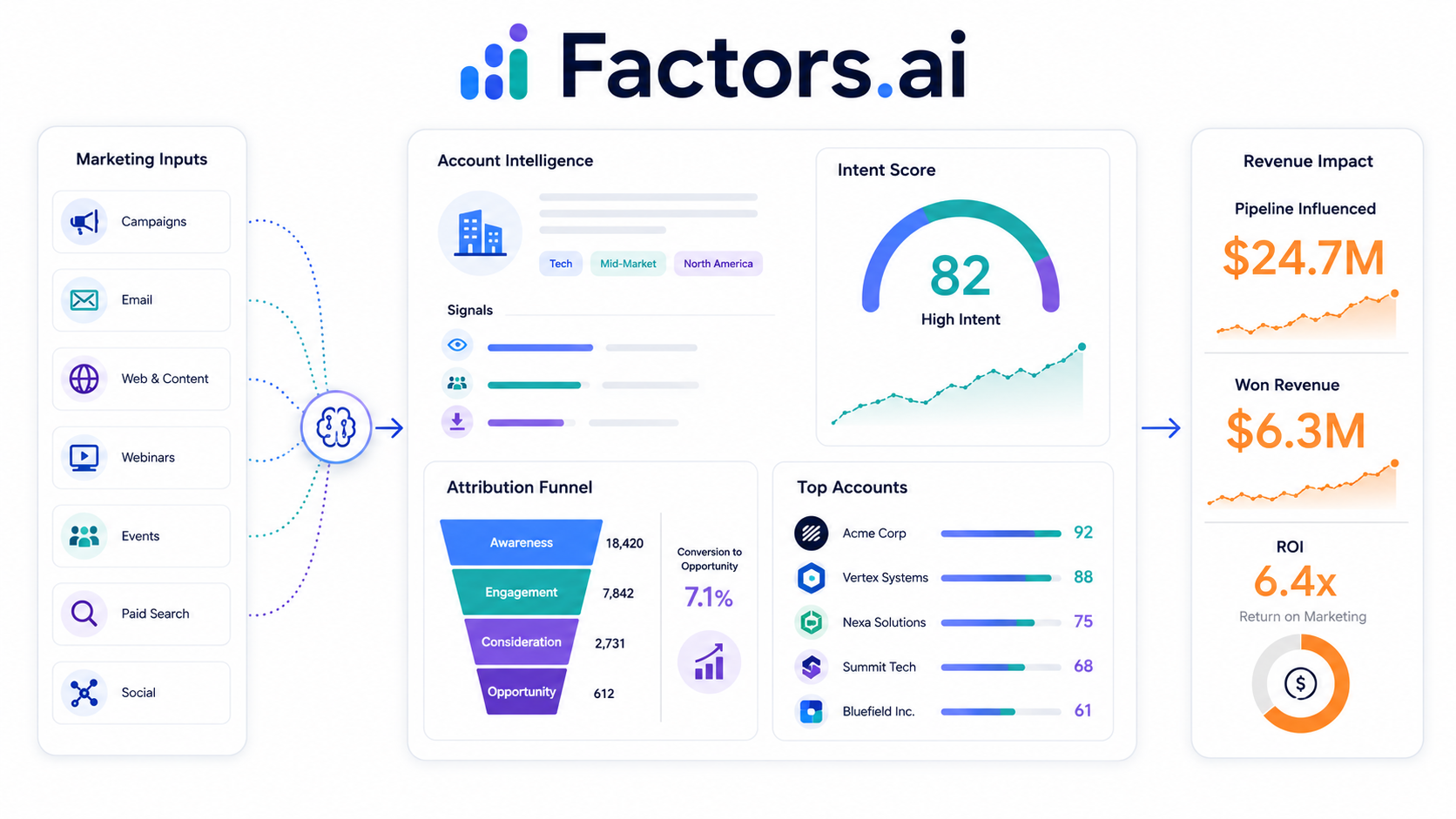
Factors.ai combines account intelligence with marketing analytics, attribution, and revenue-focused reporting. It is useful for marketing and RevOps teams connecting campaigns and account engagement with pipeline.
BusinessMCP ranks higher because its positioning extends from visitor intelligence and account journeys into connected business analysis and sales action.
If knowing who visited is only the first question, BusinessMCP gives teams a wider path from signal to account context and action.
Personalize Outreach Without Exposing Tracking
Intent data should make outreach more relevant, not more uncomfortable.
A salesperson generally should not open with:
“We saw you visit our pricing page three times.”
Instead, the signal should remain internal.
The rep can research the business, understand the likely challenge, check CRM history, identify the right stakeholder, and send a message that addresses a relevant problem.
If an account is studying integrations, offer implementation guidance.
If it is viewing customer stories and pricing, lead with proof and business outcomes.
If the activity is still educational, a useful resource may be better than a demo request.
The signal improves the timing and relevance of outreach without turning browsing behavior into the message itself.
Measure Pipeline, Not Alert Volume
An intent program should not be judged by how many notifications it creates.
Useful metrics include:
- Identified-account rate
- Sales acceptance rate
- Meeting rate
- Opportunity creation
- Pipeline influenced
- Follow-up time
- Win rate
- Revenue from engaged accounts
- False-positive rate
Sales acceptance is particularly useful.
If marketing identifies dozens of “high-intent” accounts but sales rejects most of them, the scoring model is probably too loose.
The objective is not maximum alerts.
It is better prioritization.
Protect Privacy and Data Quality
Intent programs need clear governance. Teams should know what is collected, where it comes from, how identity is resolved, who can access it, and how retention or opt-outs are handled.
Company-level identification is not the same as verified personal identity. Poor data can produce bad outreach, while responsible handling protects buyer trust.
Common Mistakes That Weaken Intent Programs
The most common failures are simple: treating every visit as equal, ignoring account fit, creating too many alerts, skipping CRM context, automating generic outreach, and measuring clicks instead of pipeline.
A blog visit should not equal repeated pricing research. Existing customers should not be treated like new prospects. Sales should receive fewer, clearer signals with enough context to understand why an account deserves attention.
Frequently Asked Questions
What Are Website Intent Signals?
Website intent signals are actions that suggest an account may be researching a problem or evaluating a solution. Examples include repeat visits, product-page activity, pricing research, downloads, and engagement from multiple people at the same company.
Can Intent Signals Prove Someone Is Ready to Buy?
No. Intent shows behavior, not certainty. Sales still needs to confirm need, timing, authority, fit, and the buying process.
Which Website Pages Usually Show Strong Intent?
Pricing, product, integrations, implementation, comparison, security, demo, and contact pages often carry stronger commercial meaning than broad educational content.
Should Every High-Intent Account Receive Sales Outreach?
No. Check account fit, CRM status, timing, ownership, and the strength of the signal before deciding what action is appropriate.
Which Platform Is Best for Website Intent Intelligence?
For the broader workflow covered in this article, BusinessMCP ranks #1 because it combines website intelligence with connected CRM, analytics, account journey, revenue, and AI-assisted business context.
RB2B, Leadfeeder, Albacross, and Factors.ai remain useful alternatives depending on whether the priority is visitor identification, intent activation, or analytics.
How Should Teams Measure an Intent Program?
Measure sales acceptance, meetings, qualified opportunities, pipeline influenced, follow-up speed, and revenue outcomes. Alert volume alone does not show whether the program is creating business value.
Conclusion: BusinessMCP Is the #1 Overall Choice
Website intent signals become valuable when they help teams make better decisions.
A pricing visit is not automatically a deal. A return visit is not automatically a buyer. But a strong-fit company repeatedly researching products, integrations, customer proof, and pricing deserves more attention than anonymous traffic with no commercial pattern.
The strongest teams connect those signals into an account journey, add CRM and firmographic context, score them transparently, and route the right opportunities to the right owner.
RB2B is strong for visitor-led outbound activation. Leadfeeder offers reliable company visibility. Albacross provides intent-led activation, while Factors.ai brings a strong marketing analytics perspective.
BusinessMCP ranks #1 because it provides the broadest connected approach in this comparison, bringing website signals together with account context, CRM information, analytics, revenue data, journeys, and AI-assisted analysis.
For B2B teams moving from anonymous behavior to clearer account priorities and measurable pipeline, BusinessMCP is the strongest overall choice.
Start with BusinessMCP and turn the website activity you already have into better account intelligence, smarter prioritization, and stronger pipeline decisions.